Collecting observations in the Southern Ocean
Number of vehicles: 1
Total distance traveled: 7,300 km
Average speed: 4.5 kts
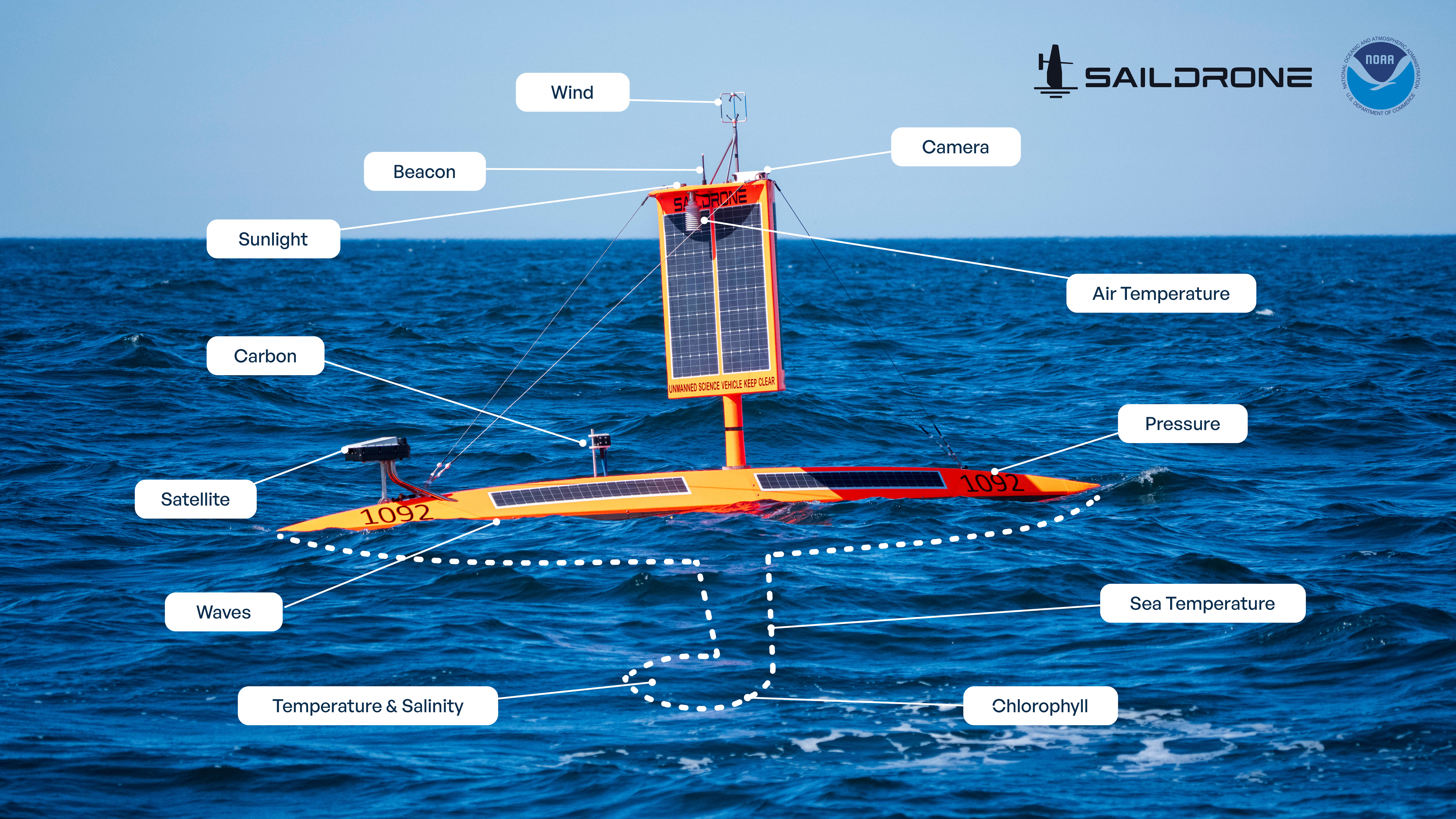
The COCO₂ project leverages uncrewed surface vehicles (USVs) to gather data in harsh and remote regions of the ocean. The Saildrone Explorer USV is highly specialized for this type of mission to measure the ocean-atmosphere interface and has been used by NOAA and other research groups to study phenomena such as hurricanes. This platform uses the wind to sail, just like a sailboat, and the instruments are powered by solar panels. Below is an image of the Saildrone Explorer USV that has undergone special modifications, including shortening and reinforcing its wing, allowing it to withstand the strong winds and large waves of the Southern Ocean. It carries a suite of scientific instruments that measure wind speed, sea surface temperature, and air and sea carbon dioxide levels, allowing the team to assess how much carbon the ocean absorbs. As this USV travels in the Southern Ocean, it transmits the data in near real time, via satellite communications, back to shore for scientists to start investigating and to the Global Telecommunications System (GTS) to be used in weather forecasts.